This podcast episode is worth 0.29 CPD credits. Upgrade to Pro
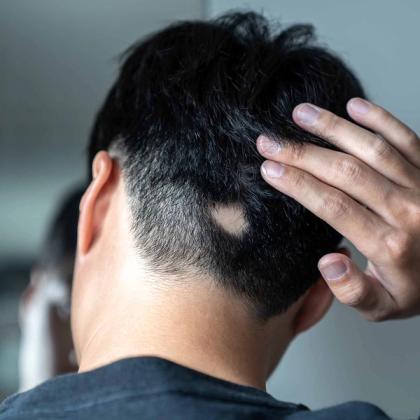
In this episode, Dr Roger Henderson provides an overview of alopecia, one of the most common yet often misunderstood conditions encountered in clinical practice. While hair loss is rarely life-threatening, it can have a profound impact on a patient’s psychological wellbeing, self-esteem and quality of life. Alopecia is not a single disease but a clinical sign with numerous underlying causes, ranging from temporary and reversible conditions to forms of permanent scarring hair loss; for GPs, distinguishing between these types is essential for accurate diagnosis, timely intervention and effective management. The episode covers the major categories of alopecia, reviews key clinical features and diagnostic approaches, and explores current treatment strategies. It also considers the important psychosocial effects of hair loss and the role GPs play in supporting affected patients.
Key take-home points
- Alopecia refers to the absence or loss of hair in areas where hair is normally present and may be localised or diffuse, temporary or permanent.
- The most important initial distinction is between non-scarring and scarring alopecia. Non-scarring alopecias preserve hair follicles and may be reversible, whereas scarring alopecias destroy follicles permanently.
- Androgenetic alopecia is the most common form of hair loss in both men and women.
- Male-pattern hair loss typically affects the vertex, bitemporal and frontal scalp. Female-pattern hair loss usually presents with diffuse thinning over the central scalp while preserving the frontal hairline.
- Treatment options for androgenetic alopecia include topical minoxidil for both sexes and oral finasteride in appropriately selected male patients; platelet-rich plasma, low-level laser therapy and hair transplantation are further options.
- Alopecia areata is a chronic immune-mediated condition that commonly presents as sudden patchy hair loss. Its course is often unpredictable, with periods of remission and recurrence.
- Exclamation mark hairs are considered a hallmark clinical feature of active alopecia areata.
- Management of alopecia areata depends on severity: limited disease often responds to topical or intralesional corticosteroids, while more extensive disease may require systemic therapy and Janus kinase inhibitors have emerged as a promising option for severe disease.
- Telogen effluvium results from premature transition of hair follicles into the telogen phase. Hair shedding usually becomes noticeable 2–3 months after the triggering event.
- Common triggers for telogen effluvium include psychological stress, illness, surgery, pregnancy, nutritional deficiencies, endocrine disorders and certain medications.
- Frontal fibrosing alopecia and lichen planopilaris are the two most common primary scarring alopecias.
- Scarring alopecias require early recognition because hair follicle destruction is irreversible. Delayed diagnosis may result in permanent hair loss that cannot be restored.
- A thorough history should explore onset, progression, distribution of hair loss, medications, family history, dietary factors and associated symptoms.
- Dermoscopy is an essential diagnostic tool in the assessment of alopecia. It can reveal characteristic features that are not visible to the naked eye and help narrow the differential diagnosis.
- The hair-pull test is a simple bedside examination that can help identify active hair shedding and assess disease activity.
- Laboratory investigations should be guided by clinical findings. Common tests include a full blood count, iron studies, thyroid function tests and vitamin D levels.
- Management depends on the specific subtype of alopecia, but psychosocial support should be considered for all patients. Hair loss can significantly affect self-esteem, quality of life and mental health across all age groups.
Key references
- Tamashunas NL, Bergfeld WF. Cleve Clin J Med. 2021;88(3):173-182. doi: 10.3949/ccjm.88a.20014.
- Wolff H, et al. Dtsch Arztebl Int. 2016;113(21):377-386. doi: 10.3238/arztebl.2016.0377.
- Phillips TG, et al. Am Fam Physician. 2017;96(6):371-378.
- McDonald KA, et al. J Am Acad Dermatol. 2017;76(3):472-477. doi: 10.1016/j.jaad.2016.10.002.
- Cummins DM, et al. Biomedicines. 2021;9(12):1755. doi: 10.3390/biomedicines9121755.
- Moreno-Arrones OM, et al. J Eur Acad Dermatol Venereol. 2017;31(10):1739-1745. doi: 10.1111/jdv.14287.
Key resource
Create an account to add page annotations
Annotations allow you to add information to this page that would be handy to have on hand during a consultation. E.g. a website or number. This information will always show when you visit this page.