This podcast episode is worth 0.22 CPD credits. Upgrade to Pro
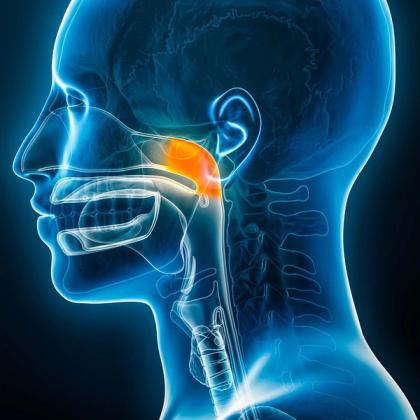
In this episode, Dr Roger Henderson focuses on nasopharyngeal carcinoma, an uncommon head and neck malignancy in many parts of the world, but one with distinctive epidemiology, biology and patterns of presentation. It has a strong association with Epstein–Barr virus (EBV), occurs with striking geographical and ethnic variation, and often presents with cervical lymphadenopathy rather than obvious symptoms from the primary tumour. The episode looks at the current WHO histological classification, the role of EBV and host factors, the clinical features that should raise suspicion, and how the disease is investigated and staged. It then reviews the principles of modern treatment, including radiotherapy, chemotherapy and multidisciplinary management, and discusses prognosis and post-treatment surveillance.
Key take-home points
- Nasopharyngeal carcinoma is uncommon in many non-endemic populations, but its incidence varies substantially with geography and ancestry, particularly affecting populations in parts of Asia.
- EBV has a central role in nasopharyngeal carcinoma, particularly in endemic populations, but EBV infection alone is not sufficient to cause malignancy.
- The disease reflects an interaction between viral, genetic and environmental factors, with host susceptibility and environmental exposures contributing alongside EBV.
- The current WHO classification recognises three histological subtypes: non-keratinising squamous cell carcinoma, keratinising squamous cell carcinoma and basaloid squamous cell carcinoma.
- Non-keratinising squamous cell carcinoma combines the former WHO types 2 and 3 and represents the major EBV-associated clinical entity.
- A persistent cervical lymph node in an adult should prompt careful assessment, particularly when there is no clear benign explanation.
- Nasopharyngeal carcinoma may present with cervical lymphadenopathy before obvious symptoms from the primary tumour, reflecting the tendency for early regional nodal spread.
- Unilateral middle-ear effusion in an adult is an important clinical clue, as a nasopharyngeal tumour can obstruct the Eustachian tube.
- Other symptoms include unilateral nasal obstruction, epistaxis, hearing symptoms, headache, facial pain, dysphagia and otalgia, while skull-base extension may produce cranial nerve or visual abnormalities.
- Nasal endoscopy is central to assessment, as the nasopharynx can be difficult to evaluate adequately with routine examination alone.
- Magnetic resonance imaging is particularly useful for defining the primary tumour and assessing skull-base involvement, while computed tomography is valuable for bony and nodal assessment and positron emission tomography–computed tomography can help evaluate occult nodal or distant disease.
- Histological confirmation remains essential, usually through endoscopic biopsy of the primary lesion; fine-needle aspiration of cervical lymphadenopathy can be useful when the primary is not immediately apparent.
- Radiotherapy is the cornerstone of treatment, reflecting both the anatomy of the nasopharynx and the radiosensitivity of the disease.
- Chemotherapy is incorporated according to stage and patient factors, with concurrent cisplatin-based chemoradiotherapy commonly used for more advanced disease and induction chemotherapy considered in selected settings.
- Long-term surveillance matters because patients may have prolonged survival but significant treatment-related morbidity, including xerostomia, hearing impairment and endocrine dysfunction; clinical examination, nasal endoscopy, appropriate imaging and thyroid monitoring all have roles.
Key references
- Bossi P, et al. Ann Oncol. 2021;32(4):452-465. doi: 10.1016/j.annonc.2020.12.007.
- Maghami E, et al. J Clin Oncol. 2020;38(22):2570-2596. doi: 10.1200/JCO.20.00275.
- Chen YP, et al. J Clin Oncol. 2021;39(7):840-859. doi: 10.1200/JCO.20.03237.
- Chen YP, et al. Lancet. 2019;394(10192):64-80. doi: 10.1016/S0140-6736(19)30956-0.
- NICE. 2026. https://www.nice.org.uk/guidance/ng12.
Create an account to add page annotations
Annotations allow you to add information to this page that would be handy to have on hand during a consultation. E.g. a website or number. This information will always show when you visit this page.