This podcast episode is worth 0.19 CPD credits. Upgrade to Pro
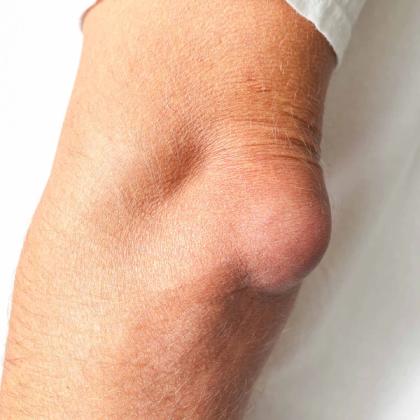
Olecranon bursitis is the inflammation of the bursa overlying the olecranon process, presenting as localised, fluctuating posterior elbow swelling that necessitates clinical differentiation between aseptic (traumatic, crystalline) and septic aetiologies for appropriate management. In this episode, Dr Kate Chesterman discusses the risk factors for olecranon bursitis as well as its diagnostic features. The differences in presentation between septic and non-septic cases are explored, and the management of both is reviewed. Also included are the criteria for secondary-care involvement and advice that we can pass on to patients to try to prevent recurrent episodes of this condition.
Key take-home points
- Olecranon bursitis will usually present with a discrete swelling over the olecranon process.
- Olecranon bursitis can be classified into either septic or non-septic cases.
- Septic conditions are responsible for about a third of all cases of olecranon bursitis.
- Staphylococcus aureus accounts for 80–90% of septic cases.
- A septic case should be considered if the swelling is hot, red and tender, if there is an acute onset of symptoms with no trauma, if there is a laceration over the bursa, if the patient has fever or rigors or if they are seeking medical help early in the condition. Septic cases should also be considered in the immunocompromised.
- Non-septic cases usually occur secondary to acute or repetitive trauma, overuse, or crystal deposition.
- For non-septic cases a conservative approach is encouraged. Patients should avoid activities and positions that worsen their symptoms. Ice wrapped in a towel can be applied and simple analgesia can manage discomfort. Compression bandages can also help to relieve pain and elbow pads can help to reduce further trauma.
- If the condition is refractory, then an aspiration of the bursa to relieve discomfort, with or without corticosteroid injection into the bursa, can be considered. This may require a referral to secondary care.
- For septic olecranon bursitis the bursa should be aspirated, and the fluid sent for microscopy and culture as well as crystal analysis. This may require the involvement of secondary care.
- Patients with septic olecranon bursitis should be given antibiotics. Flucloxacillin is usually recommended as the first-line choice or clarithromycin for those who are allergic to penicillin.
- If the patient is unwell, has a severe infection or has extensive cellulitis, they may require an admission for parenteral antibiotics. Concerns about a possible septic arthritis should also be referred for an urgent, same-day assessment.
Key references
- Stell IM. J Accid Emerg Med. 1996;13(5):351-353. doi: 10.1136/emj.13.5.351.
- GPnotebook. 2024. https://gpnotebook.com/en-GB/pages/musculoskeletal-medicine/olecranon-bursitis.
- Patient.Info. 2022. https://patient.info/doctor/orthopaedics/olecranon-bursitis.
- BMJ Best Practice. 2025. https://bestpractice.bmj.com/topics/en-gb/523.
Create an account to add page annotations
Annotations allow you to add information to this page that would be handy to have on hand during a consultation. E.g. a website or number. This information will always show when you visit this page.