This podcast episode is worth 0.24 CPD credits. Upgrade to Pro
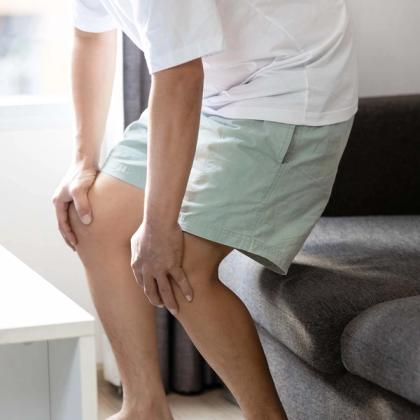
Chondromalacia patella (CMP), sometimes called “runner’s knee”, is a degenerative condition involving softening and breakdown of the patellar articular cartilage, most often due to abnormal patellofemoral mechanics, muscular imbalance or repetitive micro-trauma. It commonly presents with anterior knee pain worsened by stair descent, squatting, running or prolonged sitting. Diagnosis relies on clinical evaluation supported by imaging (especially magnetic resonance imaging) to assess cartilage integrity and patellar alignment. Most patients improve with long-term conservative therapy focused on quadriceps strengthening, hip stabilisation and activity modification. Surgical intervention is reserved for persistent, symptomatic cases or significant maltracking. Early recognition helps prevent progression to patellofemoral osteoarthritis. In this episode, Dr Roger Henderson looks at how best to recognise the condition in our surgeries and the best plan of action for our patients.
Key take-home points
- CMP refers to softening and early degeneration of the hyaline cartilage on the underside of the patella, often preceding patellofemoral osteoarthritis.
- Excessive lateral pull on the patella, often reflected by an increased Q-angle, remains one of the most important contributors to maltracking.
- Rotational abnormalities, such as femoral anteversion, external tibial torsion and foot pronation, shift knee alignment and increase patellofemoral stress.
- Weakness of the vastus medialis oblique (VMO) reduces medial stabilisation, allowing the patella to drift laterally during knee flexion.
- Repetitive microtrauma from running, jumping or occupational kneeling can progressively injure patellar cartilage.
- Direct blows to the patella or long periods of immobilisation after injury or surgery may disrupt patellofemoral mechanics.
- Recurrent intra-articular corticosteroid injections or chondrotoxic anaesthetics can impair cartilage health and accelerate degeneration.
- Patients commonly report anterior knee pain that increases with loading activities such as squatting, stair descent or rising from a seated position.
- Pain after sitting, known as the “theatre sign”, reflects increased pressure on the patellofemoral joint in sustained flexion.
- Early CMP may not be visible on radiographs, making imaging useful mainly for identifying anatomical contributors.
- Magnetic resonance imaging is the most sensitive non-invasive tool for assessing cartilage softening, fissuring and abnormalities in patellar alignment.
- Studies suggest that greater subcutaneous knee fat thickness is associated with higher CMP severity, particularly in women.
- Initial management emphasises prolonged conservative therapy, including non-steroidal anti-inflammatory drugs, bracing, orthotics and activity modification.
- Rehabilitation centres focus on closed-chain quadriceps strengthening, VMO activation and hip and core stabilisation to improve tracking.
- Surgical realignment or cartilage procedures are reserved for patients who fail conservative care or demonstrate significant maltracking abnormalities.
Key references
- Zheng W, et al. Stem Cell Res Ther. 2021;12(1):412. doi: 10.1186/s13287-021-02478-4.
- Pihlajamäki HK, et al. J Bone Joint Surg Am. 2010;92(4):927-934. doi: 10.2106/JBJS.H.01527.
- Tuna BK, et al. Clin Imaging. 2014;38(4):495-498. doi: 10.1016/j.clinimag.2014.01.012.
- Heintjes EM, et al. Cochrane Database Syst Rev. 2004;2004(3):CD003470. doi: 10.1002/14651858.CD003470.pub2.
Create an account to add page annotations
Annotations allow you to add information to this page that would be handy to have on hand during a consultation. E.g. a website or number. This information will always show when you visit this page.