Instability (falls)
Instability, the principal feature of which is falls, is a common feature of elderly people (1,2)
- In the UK, it is estimated that one third of people aged ≥65 fall each year, rising to half of all people aged ≥80
- around 50% of the falls are seen in people with a history of falls (twice or more a year )
- is the commonest cause of accidental deaths in elders over 75 years
Falls have important implications both on the personal level and on the level of the cost to the NHS - a large burden of care is placed by people falling and needing inpatient treatment, not to mention the considerable morbidity and mortality suffered by this group.
NICE have outlined a protocol for a comprehensive falls assessment. Recommendations apply to all adults aged ≥65, and people aged 50 to 64 with risk factors, such as long term conditions or living with a learning disability, that could increase likelihood of falling. This guidance is summarised below (2,3):
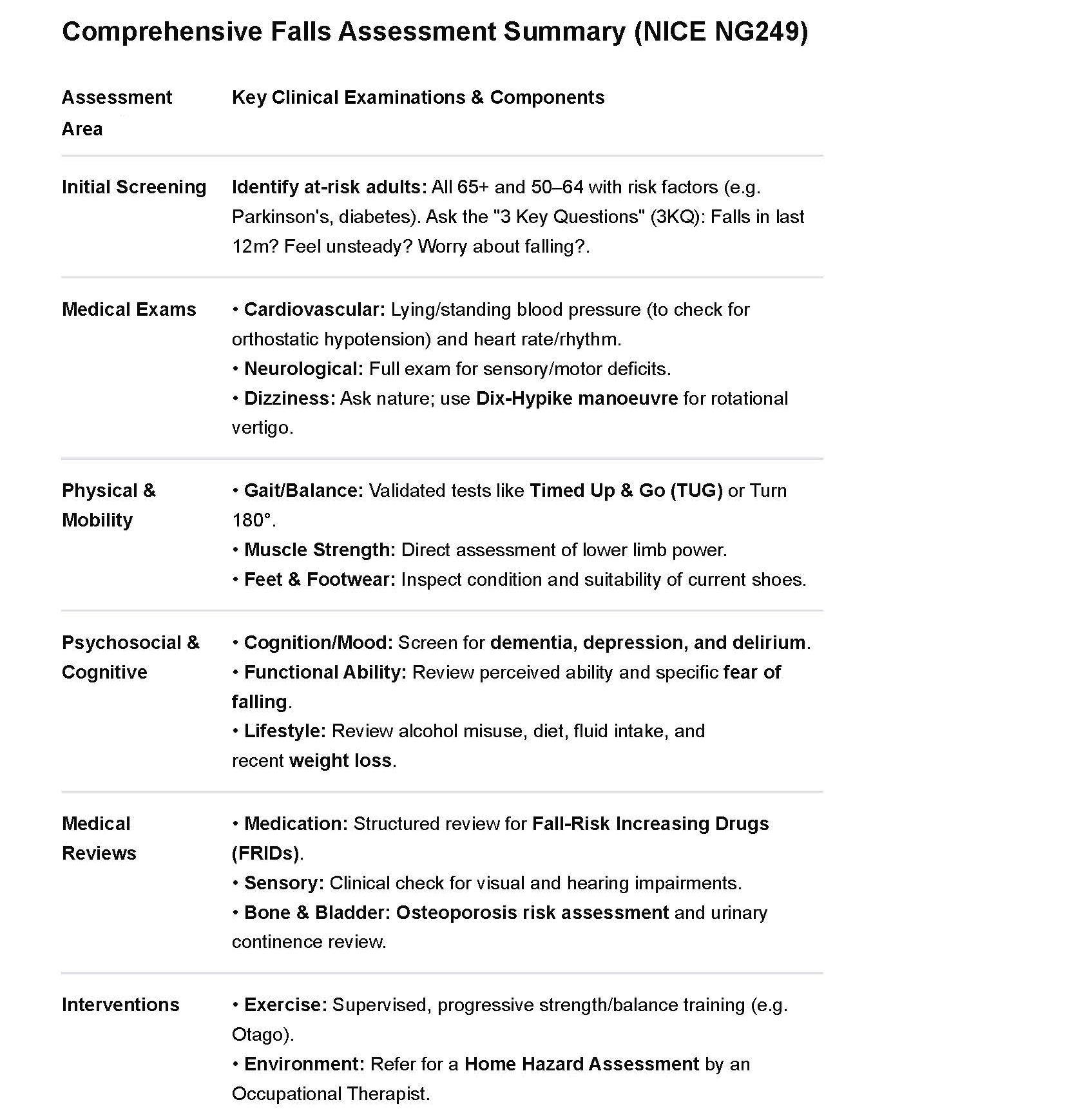
Offer a comprehensive falls assessment and comprehensive falls management to people who have fallen in the past year and meet any of the following criteria (2):
- are living with frailty
- were injured in a fall and needed medical (including surgical) treatment
- have experienced a loss of consciousness related to a fall
- have been unable to get up independently after a fall
- have had two or more falls in the past year
Reference:
- (1) British Geriatrics Society 2007. Best Practice Guides – falls
- (2) Neilson J, MacIntyre D, Whitney J, Aung T, Lally M. Assessment and prevention of falls in older people and in people 50 and over at higher risk—summary of updated NICE guidance. BMJ 2026; 392 :s223.
- (3) NICE (April 2025). Falls: assessment and prevention in older people and in people 50 and over at higher risk.
Related pages
Create an account to add page annotations
Annotations allow you to add information to this page that would be handy to have on hand during a consultation. E.g. a website or number. This information will always show when you visit this page.