discriminating menopausal 'brain fog' from dementia
The menopause transition interacts with sleep disruption, vasomotor symptoms, stress physiology, mood changes, and competing life demands characteristic of midlife, potentially amplifying day-to-day variability in attention and memory processes (1).
Cognitive symptoms - collectively termed ‘brain fog’ are highly prevalent during the perimenopause and menopause transition (2).
‘Brain fog’ has been defined as (2):
- self-reported impairment in one or more cognitive areas (such as memory, attention, organisation, problem solving, word retrieval) in the absence of a significant, objective cognitive decline
- can fluctuate (for example daily or across a menstrual cycle) and cause mild to significant distress and impact on quality of life
- does not result in sustained changes in capacity to perform activities of daily living
- the most common cognitive symptoms are subjective (or self-reported) symptoms such as:
- losing a train of thought
- word finding difficulties
- loss of immediate focus (what was meant to be done)
- forgetting information
- distraction
- misplacement of items
- difficulties on multitasking
- these symptoms often cause severe patient distress and can be mistaken by patients (and clinicians) for early-onset dementia
- differentiating benign, transition-related cognitive fluctuation from neurodegenerative disease is crucial for appropriate reassurance, investigation, and management
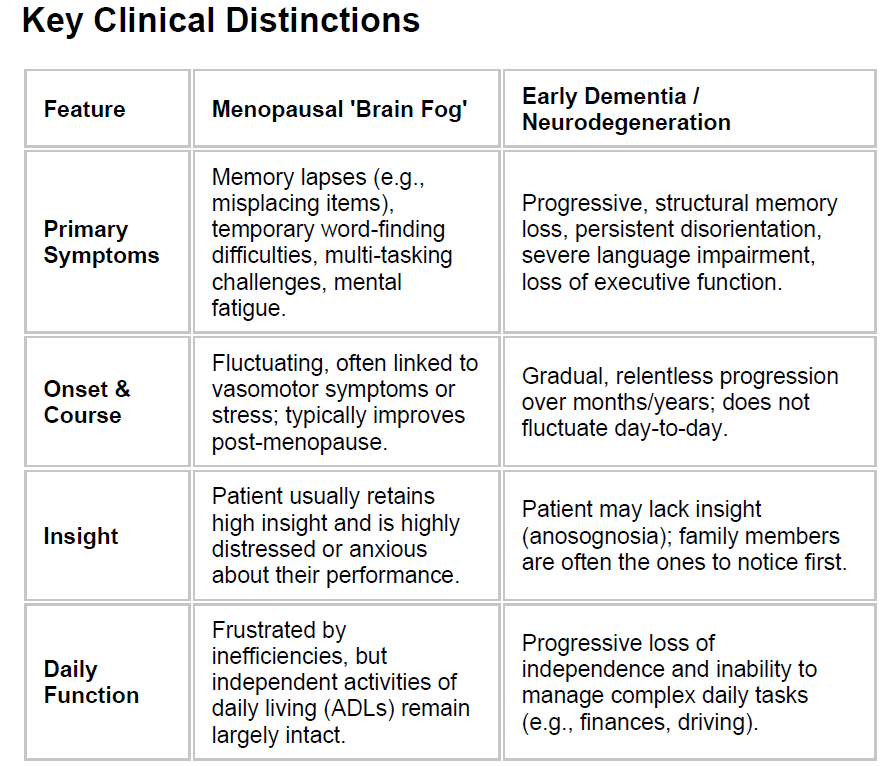
Practical approach
History and assessment of cognitive assessments (2)
- discuss age of onset, duration and nature of the problem (sudden vs insidious; fluctuating vs progressive)
- consider the context (any menstrual changes, HRT use, associated with other menopause symptoms)
- ask about impact: work/functional impact
- check family history of neurodegenerative disease
- ask about alcohol consumption, smoking and any other substance use
- assess and address vascular risk factors
- rule out other medical conditions, nutritional deficiencies, psychiatric conditions and psychosocial factors that could contribute to or exacerbate cognitive symptoms during midlife.
- consider sleep quality
- assess sleep (sleep apnoea, disrupted sleep and insomnia) as well as vasomotor symptoms – which can all exacerbate cognitive symptoms directly or indirectly
- chronic sleep disruption (often driven by nocturnal vasomotor symptoms/night sweats) directly compromises daytime executive function and memory consolidation
- assess sleep (sleep apnoea, disrupted sleep and insomnia) as well as vasomotor symptoms – which can all exacerbate cognitive symptoms directly or indirectly
- review medication - concomitant use of sedative-hypnotics, anticholinergics, or polypharmacy affecting central nervous system function
- suggested blood tests include full blood count, thyroid function, vitamin deficiencies such as B12, folate, vitamin D, HBA1C, liver and kidney function and inflammatory markers
- consider sleep quality
Management overview:
Treat contributing modifiable risk factors
- manage mood, sleep and vasomotor symptoms – consider HRT, psychological therapies (CBT or other talking therapies)
- review medications and consider a test for thyroid disease, B12 deficiency
- diabetes management
- monitor vascular risk factors and treat accordingly
- encourage physical activity, good hydration and stress reduction strategies
- promote regular aerobic exercise, stress-reduction techniques (mindfulness, yoga), a balanced diet, and cognitive engagement
When to refer
- atypical features such as neurological signs, seizures, rapid progression
- significant and sudden decline, risk to safety
- family history of early onset (under 65) cognitive impairment/dementia
- objective cognitive deficits confirmed on validated screening tools (e.g., GPCOG)
- cognitive symptoms are progressive and/or interfere substantially with work performance, relationships or quality of life
Reference:
- Gazerani P. Menopause-related brain fog as a midlife window in women's brain aging: toward ecologically valid measurement and digital phenotyping. Front Hum Neurosci. 2026 Apr 21;20:1814092.
- British Menopause Society (June 2026). Menopausal ‘brain fog’ or dementia? – a practical guide for clinicians.
Related pages
Create an account to add page annotations
Add information to this page that would be handy to have on hand during a consultation, such as a web address or phone number. This information will always be displayed when you visit this page