Subfertility
Infertility is the failure of conception in a couple having regular, unprotected coitus for one year, provided that normal intercourse is occurring not less than twice weekly.
The time period is arbitrary. It relates to the natural rates of conception.
- over 80% of heterosexual couples in the general population will conceive within 1 year if:
- the woman is aged under 40 years, and
- they do not use contraception and have regular vaginal sexual intercourse.
- of those who do not conceive in the first year, about half will do so in the second year (cumulative pregnancy rate over 90%)
- with respect to people who are using artificial insemination to conceive:
- 47% to 57% (depending on age) of women aged under 40 years will conceive within 6 cycles of intrauterine insemination (IUI)
- of those who do not conceive within 6 cycles of IUI, about half will do so with a further 6 cycles (cumulative pregnancy rate of 72% to 81%, depending on age)
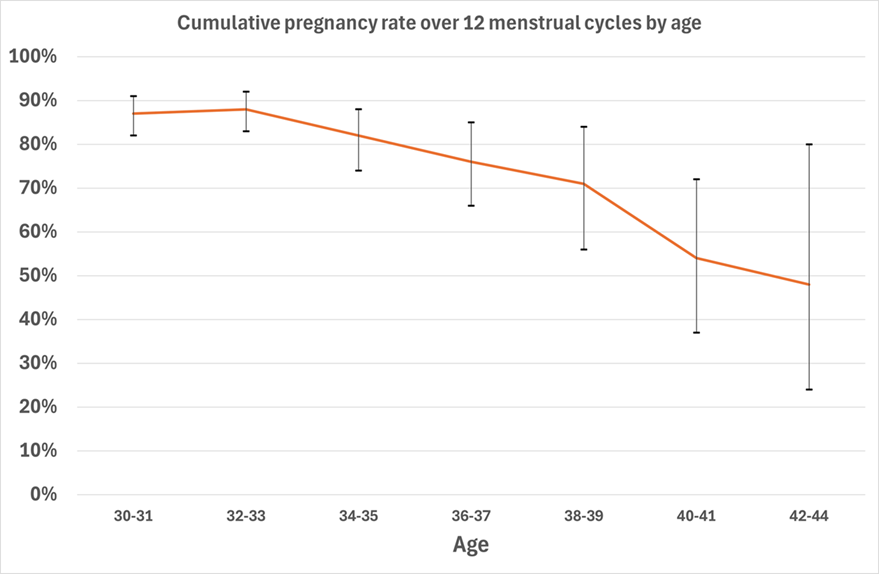
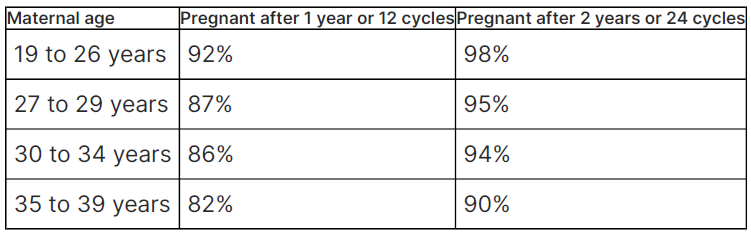
Note that that female fertility and (to a lesser extent) male fertility declines with age.
Primary infertility applies to a couple without a prior pregnancy. Secondary infertility is used when the couple have previously succeeded in achieving at least one pregnancy, including abortion and ectopic pregnancy.
The main causes of infertility in the UK are (percent figures indicate approximate prevalence):
- unexplained infertility (no identified male or female cause) (25%)
- ovulatory disorders (25%)
- tubal damage (20%)
- factors in the male causing infertility (30%)
- uterine or peritoneal disorders (10%).
In about 40% of cases disorders are found in both the man and the woman. Uterine or endometrial factors, gamete or embryo defects, and pelvic conditions such as endometriosis may also play a role.
A woman of reproductive age who has not conceived after 1 year of unprotected vaginal sexual intercourse, in the absence of any known cause of infertility*, should be offered further clinical assessment and investigation along with her partner (1)
A woman of reproductive age who is using artificial insemination to conceive (with either partner or donor sperm) should be offered further clinical assessment and investigation if she has not conceived after 6 cycles of treatment, in the absence of any known cause of infertility*. Where this is using partner sperm, the referral for clinical assessment and investigation should include her partner (1)
Offer an earlier referral for specialist consultation to discuss the options for attempting conception, further assessment and appropriate treatment where:
- the woman, trans man or non-binary person with female reproductive organs trying to become pregnant is aged 36 years or over, or
- either partner has a suspected or known clinical cause of infertility or a history of predisposing factors for infertility
Note that if a woman, or a trans man or non-binary person with female reproductive organs experiences a miscarriage or ectopic pregnancy during any of the following timeframes:
- the 1 year of unprotected vaginal sexual intercourse before people become eligible to have investigations for infertility
- the period of expectant management for people with unexplained infertility
- the 12 cycles of artificial insemination
- continue to follow the timeframe and do not restart it after the miscarriage or ectopic pregnancy
*Suspected or known clinical cause of infertility
This includes history, symptoms and signs, for example:
- irregular or absent periods
- significant pelvic pain
- gynaecological condition such as endometriosis or chronic pelvic inflammatory disease
- history of ectopic pregnancy
- history of recurrent ovarian cystectomies
- history of multiple abdominopelvic surgeries
- history of undescended testes
- history of testicular cancer
- history of inguinal or scrotal surgery with atrophic testicle
- clinically significant varicocele
- history of orchitis including mumps orchitis (if occurred post-pubertally)
- any condition with loss of ejaculation
- history of chemotherapy or pelvic radiotherapy
Given the range of causes of fertility problems, the provision of appropriate investigations is critical.
- investigations include semen analysis; assessment of ovulation, tubal damage and uterine abnormalities; and screening for infections such as Chlamydia trachomatis and susceptibility to rubella.
Once a diagnosis has been established, treatment falls into 3 main types:
- medical treatment to restore fertility (for example, the use of drugs for ovulation induction)
- surgical treatment to restore fertility (for example, laparoscopy for ablation of endometriosis)
- assisted reproduction techniques (ART) - any treatment that deals with means of conception other than vaginal intercourse. It frequently involves the handling of gametes or embryos
Reference
- NICE. Fertility problems: assessment and treatment. Clinical guideline CG156. Published February 2013, last updated March 2026
Related pages
- Aetiology
- Epidemiology
- Investigation
- Management of infertility
- Male infertility treatment
- Natural conception - initial advice to people concerned about delays in conception
- Alcohol and pregnancy (influence on conception)
- Fertility and alcohol consumption in males
- Smoking and fertility
- Caffeine and fertility
- Obesity and infertility
- Referral criteria for IVF (fertility treatment)
Create an account to add page annotations
Annotations allow you to add information to this page that would be handy to have on hand during a consultation. E.g. a website or number. This information will always show when you visit this page.