Prurigo gravidarum
This disorder should not be confused with pruritus gravidarum (itching during pregnancy).
- atopic eruption of pregnancy is a benign pruritic disorder of pregnancy which includes eczematous and/or papular lesions in patients with an atopic diathesis after exclusion of the other dermatoses of pregnancy. It is the most common dermatosis in pregnancy, accounting for 50% of patients, starts usually early, in 75% before the third trimester, and tends to recur in subsequent pregnancies due to the atopic background
- 20% of patients suffer from an exacerbation of pre-existing atopic dermatitis with a typical clinical picture
- remaining 80% experience atopic skin changes for the first time ever or after a long remission (for example, since childhood)
- 20% of patients suffer from an exacerbation of pre-existing atopic dermatitis with a typical clinical picture
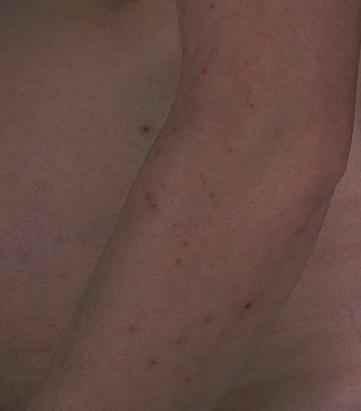
- lesions consist of excoriated, firm papules; may be confined to the abdomen and extensor surfaces, or generalised
- lesions are extremely pruritic
- onset is generally between 25 and 30 weeks' gestation
- may persist for up to 3 months postpartum
Management:
- treatment topical corticosteroids for several days will usually lead to quick improvement of skin lesions
- severe cases may require a short course of systemic corticosteroids and antihistamines; phototherapy (UVB) is a safe additional tool, particularly for severe cases in early pregnancy
Course and prognosis
- maternal prognosis is good even in severe cases as skin lesions usually respond quickly to therapy; recurrence in subsequent pregnancies is common
- fetal prognosis is unaffected - however there might be a risk of developing atopic skin changes in the infant, later-on
Reference:
- 1) Ambros-Rudolph CM. Dermatoses of pregnancy - clues to diagnosis, fetal risk and therapy. Ann Dermatol. 2011 Aug;23(3):265-75.
- 2) Update (1998), 57 (2), 131-5.
Related pages
Create an account to add page annotations
Annotations allow you to add information to this page that would be handy to have on hand during a consultation. E.g. a website or number. This information will always show when you visit this page.